

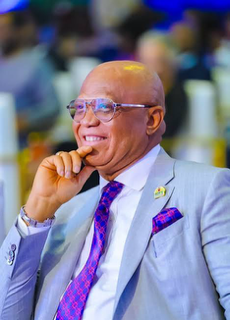
By UduakAbàsi Ikpat
There are moments in the life of a people when leadership transcends the ordinary rhythms of governance and becomes something more, something felt rather than merely just seen. It is in those moments that a leader’s humanity, not just authority, comes into focus. Such occasions invite reflection, not hurried applause, they demand a pause, not perfunctory praise. A birthday especially one that marks the quiet dignity of 62 years, is one of such moments.
It is not merely a tally of years. It is a ledger of experiences, decisions, sacrifices, and, for those in public office, the weight of expectations borne daily in silence. For a leader, it is less about candles on a cake and more about the light cast on the lives of others. And so, today, we do not just celebrate age. We celebrate the essence of dignity as the compassionate governor of Akwa Ibom State, Pastor Umo Eno turns 62.
There is something enduring about compassionate leadership. It does not shout. It does not announce itself with fanfare. Instead, it reveals itself in the small but significant ways a leader listens, responds, and, above all, understands. In a time when political leadership is too often measured by noise and spectacle, compassion remains a quiet but powerful currency. This is where the story of our amiable governor finds its footing.
Before the policies, before the projects, before the public declarations, there is a man shaped by history, by place, and by people. A man who understands that governance is not an abstract exercise but a lived reality for millions whose hopes hang delicately on the decisions taken in government houses.
To lead with compassion is to recognize that every policy has a human face. Under the administration of Governor Umo Eno PhD, it is evident in the deliberate attention to social welfare, in the attempt, sometimes imperfect, but often sincere to cushion the harsh edges of economic realities. It is seen in the prioritization of infrastructure not as monuments to power but as pathways to opportunity.
Roads are not just tar and gravel, they are lifelines to markets, to schools, to our hospitals. Mind you, the schools are not mere buildings but they are the architecture of the future.
Yet, leadership is never without burdens. There are difficult choices that history rarely explains in real time. There are decisions taken in the fog of competing interests, where every path carries both promise and consequence. It is in navigating these complexities that the true measure of a leader emerges, not in perfection, but in intent and resilience as showcased by Governor Umo Eno.
At 62, what stands out is not the absence of challenges by his government but the persistence of purpose. The governor’s commendable journey reflects a broader narrative familiar in national life, the struggle to reconcile aspiration with reality, to bridge the gap between policy and impact, to transform goodwill into tangible progress. It is a journey that demands patience from the governed and courage from one who governs.
But beyond governance, there is a glowing character. Those who have encountered him closely often speak not first of power, but of presence. A certain accessibility. A willingness to engage. An inclination to listen. These may seem like small virtues in the grand theatre of politics, but they are, in truth, the foundations upon which trust is built.
And trust, once earned, becomes the invisible infrastructure of leadership. As the years advance, he marks a third year on the saddle. The expectations do not diminish, rather they deepen. A leader at 62 is not judged merely by what has been done, but by what remains possible.
The horizon stretches further, even as the journey lengthens. So, this celebration must not be mistaken for a conclusion. It rather, a midpoint reflection, an adorable moment to take stock, to also recalibrate, and ensure a renewed commitment.
For the people, it is an opportunity to acknowledge effort where it exists and to demand more where it is needed. For the governor and his team, it is indeed a reminder that the privilege of leadership is also a call to higher responsibility.
In the end, the true celebration of a compassionate leader is not found in eloquent tributes or ceremonial gatherings. It is found in the everyday lives of the people he has served for the past three years. In the child who finds a better school, in the trader who reaches the market with ease, in the family that sleeps with eyes close due to security.
At 62, the question is not simply how far he has come, but how much farther he is willing to go, for the people, with the people, and because of the people. That is the enduring test of the governor’s compassionate leadership. And that is the celebration that truly matters now.