
By Aniekan Umanah
—————————————
1.0 There is an unmistakable shift taking place in the governance of Akwa Ibom State. It is not merely visible in the cranes dotting the skyline, the roads stretching deeper into communities, or the rising silhouettes of world-class hospitals, tourism assets and aviation infrastructure. It is reflected in something less tangible, but perhaps more enduring: a governance culture built on measurement, transparency, execution and results.
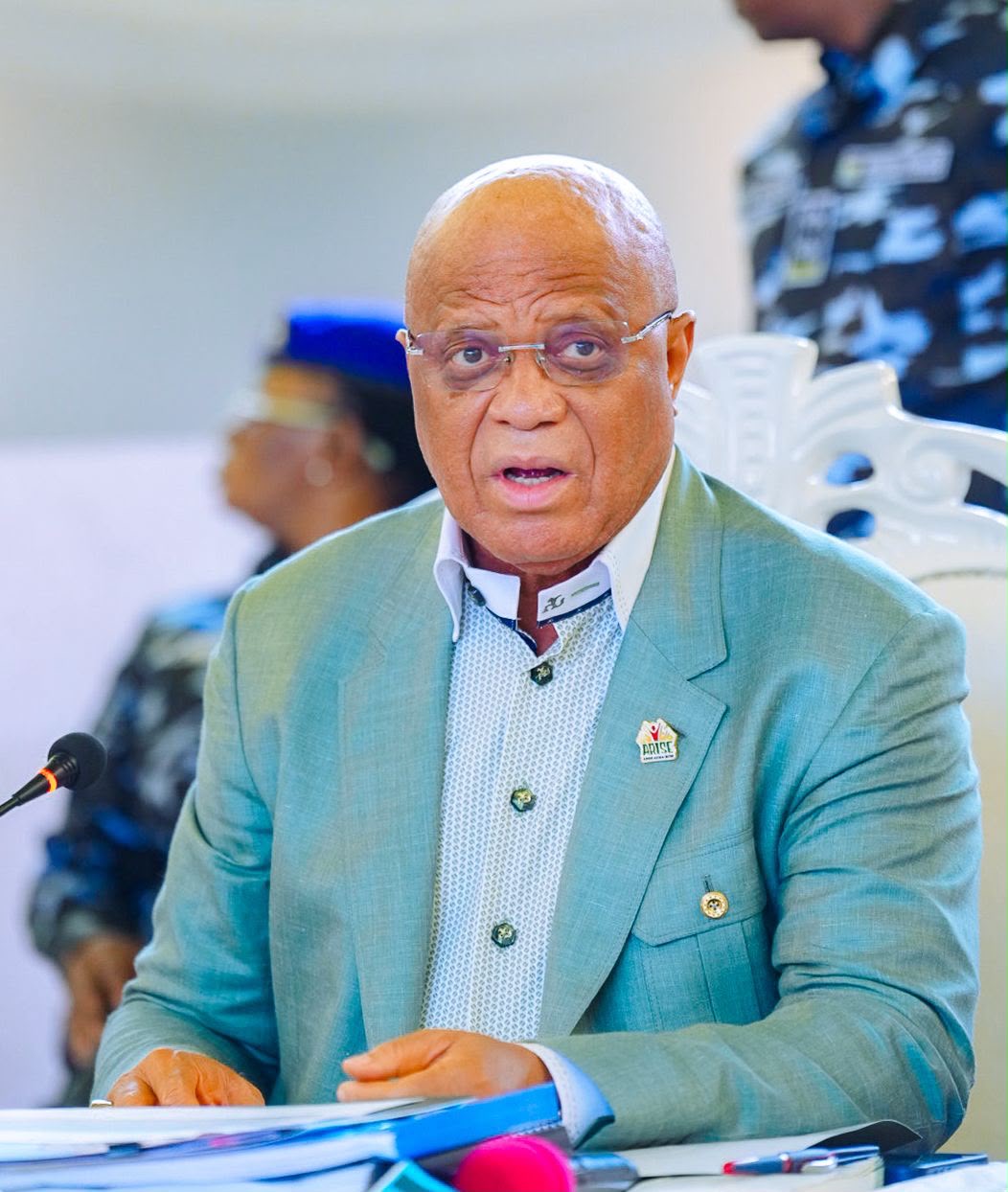
2.0 For two days in July, Akwa Ibom State Governor, Pastor Umo Eno, assembled stakeholders, Heads of Ministries, Departments and Agencies (MDAs), Delivery Advisors, political leaders, technocrats, traditional rulers, the media, civil society groups and development partners for what has become one of the defining features of his administration, the Monthly Projects Delivery Meeting. Far more than a routine government briefing, the exercise represents a robust public accountability forum where projects are scrutinised, timelines interrogated, challenges confronted and progress openly assessed.
3.0 On both days, the Governor’s characteristic get-down-to-business mien set the tone for proceedings. Brisk in movement, friendly in interactions, yet unmistakably firm in the discharge of his responsibilities, the Governor sat back for commissioners, project consultants and delivery advisors to present their updates. Repeatedly demonstrating leadership, drawing effortlessly from his deep familiarity with each project to provide additional details, strategic guidance and practical direction. It was evident that the sessions were not ceremonial briefings but executive reviews led by a Governor who knew both the vision and the minutiae of his administration’s development agenda.
4.0 In an era when public confidence is often shaped by perception, Governor Eno appears determined to make evidence the centrepiece of governance. Opening the second day’s session, he invoked the timeless words of the Greek philosopher Socrates: “An unexamined life is not worth living.” For the Governor, the quotation perfectly captured the philosophy behind the Delivery Meeting: a government that must continually examine itself, evaluate its performance and remain accountable to the people it serves.
5.0 Leadership is often measured by vision, but enduring leadership is measured by delivery. Governor Eno has consistently demonstrated a governing philosophy that combines strategic planning with practical execution. His insistence that every ministry, department and agency account for its projects before stakeholders reflects a leadership style that values responsibility over rhetoric. Welcoming participants on the opening day, he explained that the Delivery Meeting was designed to enable citizens to see firsthand how public resources were being deployed, reaffirming that transparency, due process and prudent financial management would remain the defining principles of his administration. As he reminded participants throughout the sessions, “Governance is a collective responsibility,” underscoring his belief that development flourishes best when government, institutions and citizens work in concert.
6.0 Perhaps one of the most remarkable revelations during the two-day exercise was the disclosure that the state’s internal quantity surveying mechanism has helped save more than ₦200 billion in project costs through prudent valuation and strict financial discipline. At a time when governments grapple with rising construction costs and fiscal pressures, such savings represent more than prudent accounting; they reflect deliberate stewardship. Those resources have been redirected into agriculture, rural development, infrastructure, roads, healthcare, education, housing, aviation, security and social intervention programmes. It is a governance model where efficiency has become a development asset.
7.0 The breadth of projects reviewed further illustrated an administration pursuing integrated development rather than isolated interventions. Across Akwa Ibom, over 1,300 kilometres of roads and 40 bridges are under construction, strengthening connectivity across the three senatorial districts. The aviation ecosystem continues its remarkable expansion with the completion of the new terminal building, the Aviation Village, the Command and Control Centre, the upcoming delivery of another Airbus A220-300 aircraft for Ibom Air, and the commencement of twice-weekly international flights to Accra. Maritime infrastructure, including the Oron Maritime Project and the drive towards the Ibom Deep Seaport, reflects a long-term vision for the Blue Economy, while the unveiling of the 350-bed Ibom International Hospital and the upgrading of general hospitals underscore a determined investment in quality healthcare.
8.0 The review sessions also showcased significant progress in agriculture through mechanised farming initiatives, oil palm development and food security programmes. Tourism assets, including the ARISE Palm Resort and the 200-bed Ibom International Hotel at the Convention Arena, are steadily taking shape as anchors for economic diversification. Trade infrastructure, housing, internal security, electricity reforms, Youth Development Centres, Model Schools, grassroots projects and the International Market at Ikot Ekpene all featured prominently, revealing an administration intent on simultaneously building infrastructure, expanding economic opportunity and improving quality of life.
9.0 Yet, beyond the impressive infrastructure and signature projects, Governor Eno made it clear that what he considers his greatest legacy in public service is not measured in concrete and steel. Rather, he declared that the ARISE Compassionate Homes initiative remains the crowning achievement of his administration. Conceived to restore dignity to the poorest and most vulnerable members of society, the programme has so far delivered more than 450 of the targeted 500 fully furnished two-bedroom homes, complete with solar power, potable water, household furniture and essential home utensils. Significantly, the beneficiaries are selected strictly on the basis of need, without political affiliation, social status or personal connections. It is a compassionate governance model that places humanity at the very heart of development.
10.0 One defining moment perhaps best illustrated Governor Eno’s leadership style. Before the second day’s presentations commenced, he paid an unscheduled visit to the audacious ARISE Palm Resort, a 73-hectare gully reclamation site transformed into a tourism destination, to personally verify claims made during the previous day’s deliberations. It was a simple gesture with profound symbolism. Rather than depend solely on official reports, the Governor chose direct observation, reinforcing a culture where implementation must align with presentation and where performance is validated by evidence.
11.0 Another notable feature of the Delivery Meeting was its inclusiveness. Opposition leaders, members of the National Assembly, traditional rulers, senior legal practitioners, civil society organisations, professional bodies and development stakeholders participated actively in the review process. Their goodwill messages reflected broad commendation for the administration’s transparency, fiscal discipline and commitment to measurable development. Across political and institutional divides, a striking consensus emerged: the ARISE Agenda has moved beyond aspiration into visible implementation. Stakeholders repeatedly observed that the administration’s development blueprint is firmly on course, steadily gathering momentum and, in the words of several participants, “cruising at a high crescendo.”
12.0 Governor Eno’s insistence that communities safeguard public infrastructure further revealed another dimension of his leadership. His directive that village heads, local government authorities and youth leaders work together to protect airport infrastructure from vandalism reinforced his conviction that public assets belong to the people and that development is a shared responsibility.
13.0 In closing the July Delivery Meeting, the Governor described the administration as entering its “harvest season,” a fitting metaphor for an administration now witnessing many of its strategic projects reaching maturity. Agricultural projects, tourism assets, hospitals, roads, housing projects, educational facilities, electricity reforms and transportation infrastructure are gradually transitioning from construction sites into operational public assets. Yet, even as he acknowledged the progress made, he reminded implementing agencies that the work was far from over, urging them to maintain momentum, uphold quality and complete projects within stipulated timelines.
14.0 Ultimately, Gov Eno believes that leadership is not judged by the number of projects announced but by those completed, utilised and sustained. Over the course of the two-day Delivery Meeting, he presented a compelling case that governance can be transparent, disciplined and relentlessly focused on results. That philosophy was once again demonstrated at the close of the exercise when, following a presentation on the 200-bed Ibom International Hotel by the project handlers, the Governor led the entire body of stakeholders on a night inspection of the facility to personally verify the claims made by the contractors. It was the second such verification exercise within the two-day review, reinforcing a leadership principle that has become synonymous with the Umo Eno administration: leaders get what they inspect, not merely what they expect. In that philosophy of delivery, backed by prudent financial management, rigorous project monitoring and inclusive stakeholder engagement, many observers see the foundations of a legacy taking shape in Akwa Ibom State!